
What is the Kvaser U100 and what makes it unique?
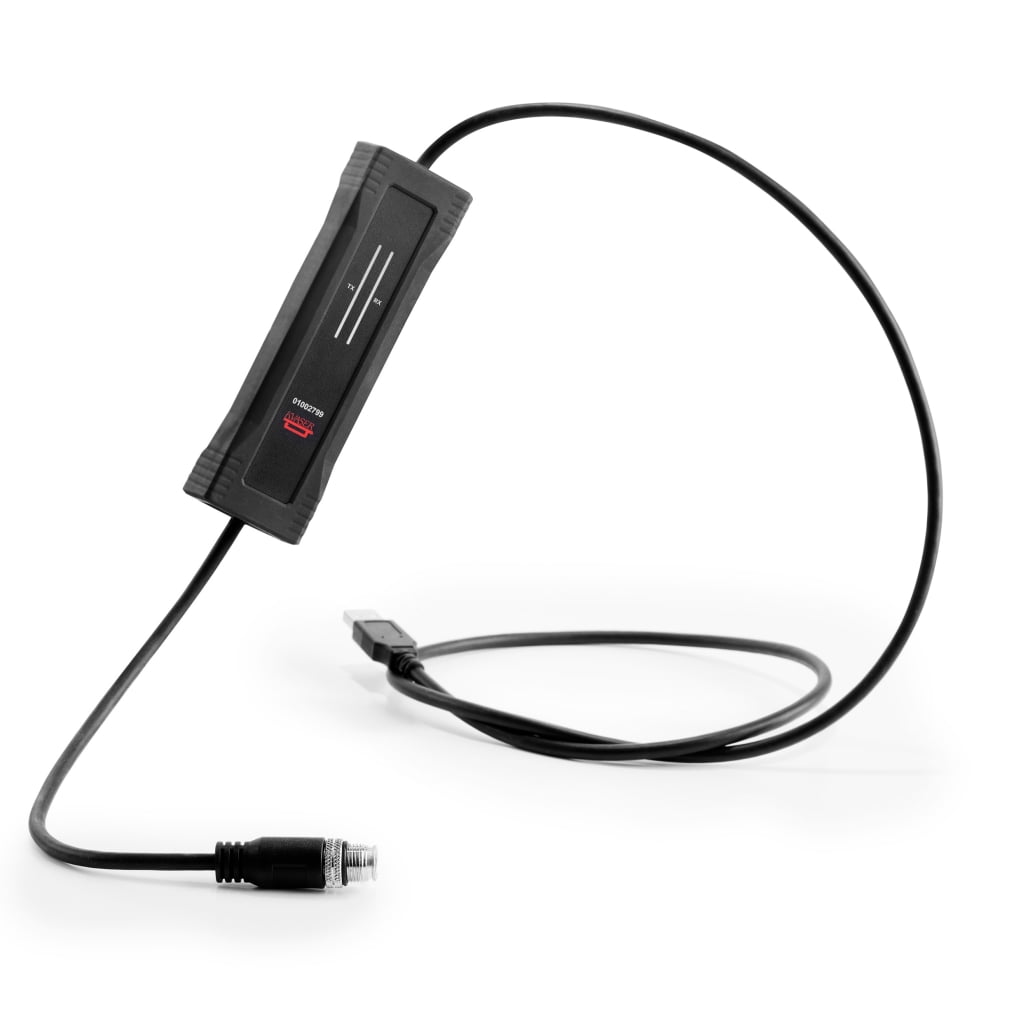
The Kvaser U100 is a rugged CAN bus interface designed for demanding industrial and automotive applications. This compact device enables reliable communication with Controller Area Network (CAN) systems in harsh environments, supporting both classic CAN and high-speed CAN FD protocols. The U100 product line includes several variants with different connector types and specialized features to meet various technical requirements. With its robust construction, wide temperature tolerance, and electromagnetic protection, the Kvaser U100 series provides dependable performance for development, testing, and maintenance of CAN-based systems across multiple industries.
What is the Kvaser U100 product line?
The U100 product line consists of rugged CAN bus interfaces designed for industrial automation and vehicle communications. These compact devices serve as critical links between computers and CAN networks, enabling professionals to access, monitor, and control CAN-based systems.
At its core, the Kvaser U100 series provides reliable connectivity between USB and CAN networks, allowing engineers and technicians to develop, test, and maintain CAN-based systems. The product family includes several variants, each tailored for specific application requirements:
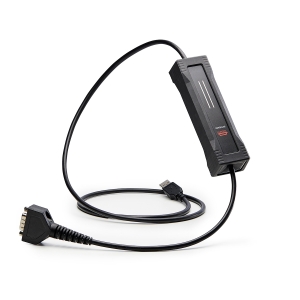
- The standard U100 with a DB9 connector
- The U100P featuring a 5-pin M12 connector
- The U100-C with OBD-II capabilities
- The U100-X1 offering specialized features for advanced applications
What distinguishes the entire U100 line is its industrial-grade durability combined with high-performance capabilities, making these devices ideal for both laboratory settings and field operations in demanding environments. If you’re interested in exploring the full range of Kvaser products, we offer comprehensive information on their various specifications and applications.
Kvaser U100P
How does the Kvaser U100 perform in harsh environments?
The Kvaser U100 excels in harsh environments thanks to its robust construction and comprehensive protection features. With an IP65 rating (IP67 for the U100P), these devices are effectively sealed against dust ingress and protected from water jets, making them suitable for outdoor installations and industrial settings.
Temperature tolerance is another standout feature of the U100 series. These interfaces operate reliably across an impressive temperature range of -40°C to +85°C, ensuring consistent performance in everything from freezing outdoor conditions to hot engine compartments. This wide operating range makes the U100 particularly valuable in automotive testing, field service, and industrial automation applications.
The U100’s electromagnetic protection capabilities are equally impressive, with built-in isolation that safeguards both the device and connected systems from electromagnetic interference (EMI). This galvanic isolation prevents ground loops and protects against voltage spikes, which is crucial when working in electrically noisy environments like manufacturing facilities or vehicle electrical systems.
In practical applications, these rugged features translate to reliable performance in challenging scenarios such as:
- Outdoor vehicle testing in extreme weather conditions
- Factory floor diagnostics amid industrial machinery
- Marine environments with exposure to moisture and salt
- Mobile field service operations across varying conditions
For real-world examples of how these rugged interfaces perform in challenging environments, check out our Case study section.
What are the key differences between U100, U100P, and other variants?
The primary differences between the U100 variants lie in their connector types, physical design, and specialized features. Each model is optimized for specific application environments while maintaining the core functionality of the product line.
The standard U100 features a traditional 9-pin D-SUB (DB9) connector, making it compatible with most standard CAN systems. It offers IP65 protection and serves as the baseline model in the series, ideal for general industrial and automotive applications.
The U100P variant stands out with its 5-pin M12 connector, commonly used in industrial automation environments. This model offers enhanced environmental protection with an IP67 rating, making it exceptionally water-resistant and suitable for washdown environments or outdoor installations.
For automotive diagnostics, the U100-C provides a specialized OBD-II connector that plugs directly into vehicle diagnostic ports. This variant is particularly useful for automotive engineers and technicians who need to access vehicle CAN networks quickly without adapter cables.
The U100-X1 offers additional specialized features for advanced applications, including enhanced compatibility with specific industrial protocols and systems.
All variants share the same core technical capabilities regarding CAN FD support, bitrates, and software compatibility, ensuring consistent performance across the product line regardless of the physical interface chosen.
How does the Kvaser U100 support both CAN FD and classical CAN?
The Kvaser U100 series provides seamless support for both CAN FD (Flexible Data-rate) and classical CAN protocols through its advanced dual-mode controller. This flexibility allows the device to communicate with both modern high-speed networks and legacy systems without requiring separate hardware.
For classical CAN, the U100 supports standard bitrates up to 1 Mbit/s, covering all common implementation speeds. When operating with CAN FD networks, the device handles data phase bitrates up to 8 Mbit/s, enabling significantly faster data transfer for applications requiring higher bandwidth. This dual capability is particularly valuable in mixed environments where both protocol types coexist.
The performance advantages of CAN FD support include:
- Larger data payloads (up to 64 bytes vs. 8 bytes in classical CAN)
- Higher throughput for data-intensive applications
- Improved efficiency in transferring diagnostic data and software updates
- Future-proofing for systems transitioning to CAN FD
The automatic protocol detection feature simplifies operation by eliminating the need for manual configuration when switching between different CAN networks. This makes the U100 particularly valuable for field service technicians who regularly connect to various systems with different protocol implementations.
Can the Kvaser U100 integrate with embedded systems like Raspberry Pi?
Yes, the Kvaser U100 readily integrates with embedded systems like Raspberry Pi, providing a powerful combination for prototyping and developing CAN-enabled applications. This integration leverages the U100’s USB connectivity and comprehensive software support to enable embedded platforms to communicate with CAN networks.
For Raspberry Pi integration, the process is straightforward. The U100 connects to the Pi’s USB port and utilizes Linux-compatible drivers that support the device’s full functionality. This setup enables the Raspberry Pi to serve as a compact development platform for CAN applications, ideal for IoT projects, industrial monitoring systems, or automotive prototyping.
Software requirements for successful integration include:
- Linux SocketCAN drivers (included in standard Linux distributions)
- Kvaser’s Linux driver package for enhanced functionality
- Programming libraries for Python, C, or other languages depending on the project requirements
Beyond Raspberry Pi, the U100 works similarly with other embedded platforms like BeagleBone, industrial PCs, and custom embedded systems. The device’s low power consumption makes it suitable for portable and battery-powered applications, while its rugged design ensures reliability in embedded systems deployed in challenging environments.
Key takeaways about the Kvaser U100 series
The Kvaser U100 product line stands out as a versatile and robust solution for CAN bus connectivity across multiple industries. Its combination of durability, protocol flexibility, and performance makes it an essential tool for professionals working with CAN-based systems.
The key advantages of the U100 series include:
- Environmental durability with IP65/IP67 ratings and wide temperature tolerance
- Dual protocol support for both CAN FD and classical CAN
- Variety of connector options to match specific application requirements
- Comprehensive software compatibility across operating systems
- Reliable performance in electromagnetically noisy environments
These interfaces find their value in numerous applications, from automotive testing and industrial automation to embedded system development and field service operations. The versatility and reliability of the U100 series have established it as a trusted tool for engineers and technicians who require dependable CAN connectivity in demanding situations.
Whether you’re developing new CAN-based systems, maintaining existing networks, or integrating CAN capabilities into embedded applications, the Kvaser U100 provides the performance and durability needed for successful implementation. For specific technical requirements or application advice, our team is ready to help you select the optimal variant for your needs.