
Is the Kvaser U100 suitable for rugged environments?
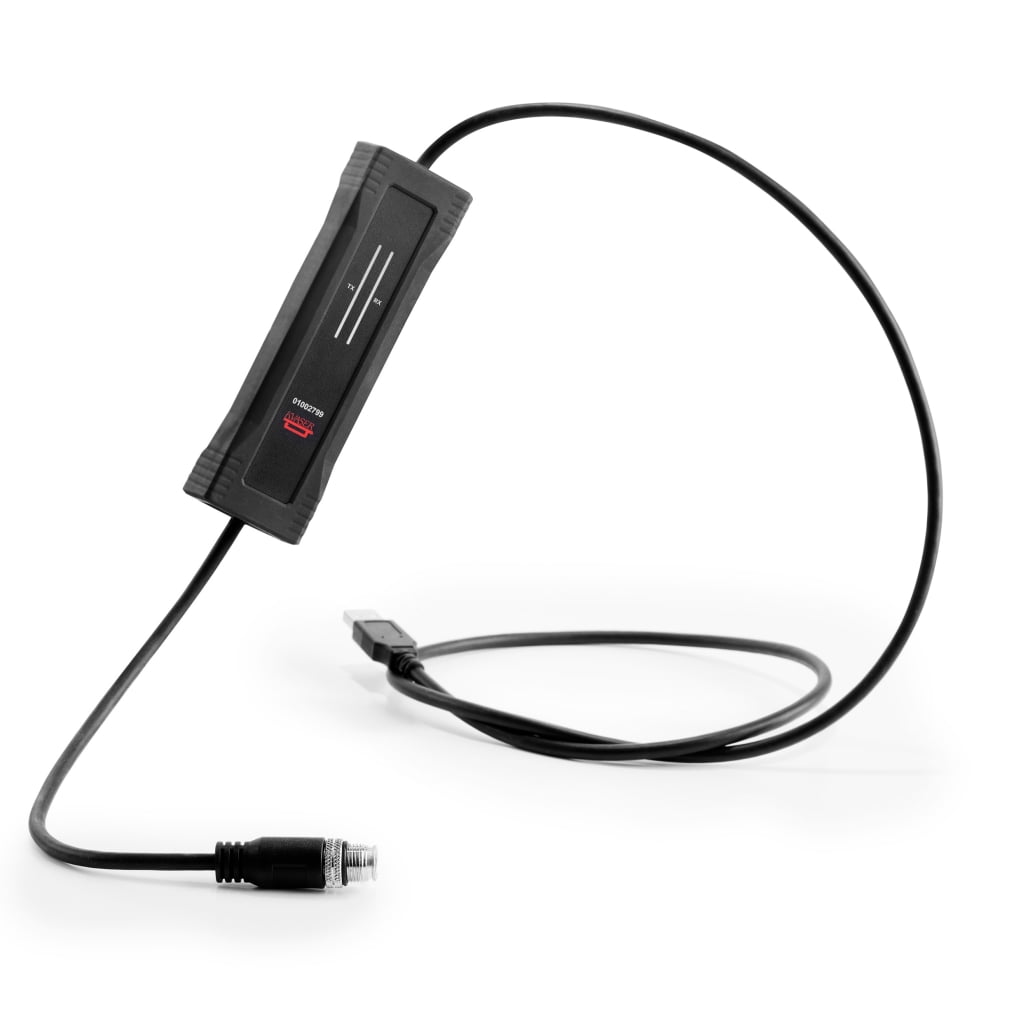
The Kvaser U100 series is highly suitable for rugged environments due to its robust design and technical specifications. These CAN bus interfaces offer exceptional durability with IP ratings up to IP65, extended temperature range operation (-40°C to 85°C), and strong resistance to vibration and shock. The series includes multiple variants (U100, U100P, U100-C, U100-X1) that provide different levels of environmental protection, from basic industrial settings to extremely harsh conditions. With galvanic isolation, protected circuitry, and reliable connectivity options, the Kvaser U100 series delivers dependable performance in challenging industrial applications.
What is the Kvaser U100 series and what makes it rugged?
The Kvaser U100 series is a family of compact, high-performance CAN bus interfaces designed specifically for demanding industrial applications. These devices serve as the communication bridge between computers and CAN networks, enabling monitoring, analysis, and control of CAN-based systems.
What makes the U100 series particularly rugged is its comprehensive environmental protection features. The entire product line offers extended temperature range operation from -40°C to 85°C, allowing reliable functionality in both extremely cold and hot environments. This temperature tolerance makes these devices suitable for outdoor installations, manufacturing floors, and automotive testing applications.
The series features robust housing designs with varying degrees of protection. The basic U100 model offers solid protection for standard industrial settings, while more specialised variants provide enhanced durability. The physical construction includes reinforced connectors and secured internal components to withstand significant vibration and shock – crucial qualities for mobile equipment and manufacturing environments.
Additionally, the U100 series incorporates electrical protection mechanisms including galvanic isolation in certain models, which shields against ground loops and voltage differences that commonly cause issues in industrial systems. This robust design philosophy extends throughout the product family, making them reliable tools for engineers working in challenging conditions.
How do different Kvaser U100 variants perform in harsh environments?
The various Kvaser U100 variants offer different levels of environmental protection tailored to specific application needs. The standard U100P features an IP52 rating, providing dust protection and resistance against water drops, making it suitable for indoor industrial environments with moderate exposure to contaminants.
For more demanding applications, the U100P-X steps up with an impressive IP65 rating, offering complete dust-tight protection and resistance against water jets from any direction. This makes it ideal for outdoor installations, manufacturing floors with cleaning processes, and other wet or dusty environments.
The U100-C variant focuses on electromagnetic compatibility (EMC), with enhanced protection against electromagnetic interference. This model excels in environments with high electrical noise, such as manufacturing facilities with numerous motors, drives, and power switching equipment. Its robust EMC protection prevents communication errors and data corruption in electrically noisy settings.
The U100-X1 represents the pinnacle of ruggedness in the series, combining high IP rating with superior electromagnetic protection. It features reinforced connectors and enhanced vibration resistance, making it suitable for mobile equipment, heavy machinery, and extreme industrial environments. Its sealed construction protects against chemicals, oils, and other industrial contaminants that would damage standard electronics.
Each variant maintains the core temperature range tolerance (-40°C to 85°C) that characterises the entire U100 line, ensuring reliable operation in temperature-variable environments. The differences lie primarily in their physical protection levels and electromagnetic immunity capabilities.
Kvaser U100-X2
What are the power and connectivity features of the Kvaser U100 series?
The Kvaser U100 series offers flexible power and connectivity options that enhance reliability in challenging environments. All models are USB-powered, drawing their energy directly from the host computer, which eliminates the need for external power supplies and simplifies installation in various settings.
A key feature of the U100 series is galvanic isolation between the USB side and the CAN interface on certain models. This isolation creates an electrical barrier that prevents ground loops and protects both the interface and connected equipment from damage due to voltage differences – a common issue in industrial settings with multiple power sources.
For CAN connectivity, the series offers different connector options depending on the model. The standard U100 and U100P use a 9-pin D-SUB connector, which is the industry standard for CAN connections. The U100-C features a more robust connector design for improved durability in high-vibration environments. The U100-X1 utilises specialised industrial connectors that provide superior environmental sealing and mechanical strength.
All models feature protective circuitry on the CAN interface that guards against electrical transients and common-mode voltage issues. This protection is particularly valuable in environments with unpredictable electrical conditions, such as automotive systems, industrial machinery, and field installations where power quality can vary significantly.
The USB connection is also reinforced across the product line to withstand repeated connections/disconnections and resist cable strain – factors that often cause failures in less robust interfaces. This attention to connectivity reliability makes the U100 series particularly well-suited for test and validation applications where equipment is frequently reconfigured.
How does the Kvaser U100 perform with CAN FD and classical CAN protocols?
The Kvaser U100 series delivers excellent performance with both CAN FD and classical CAN protocols, making it a versatile solution for modern industrial communication needs. All U100 variants fully support CAN FD (Flexible Data-rate) protocol, allowing data rates up to 8 Mbps in the data phase while maintaining compatibility with traditional CAN networks.
For classical CAN communications, the U100 series handles the standard 1 Mbps maximum data rate with reliable message transmission and reception. This backwards compatibility is crucial for industrial environments where new equipment often needs to integrate with existing CAN infrastructure.
The U100’s performance under load is particularly impressive, with the ability to handle high-traffic CAN networks without message drops or timing issues. This reliability is maintained even in electrically noisy environments thanks to the robust transceiver design and signal integrity protection measures built into the hardware.
For applications requiring precise timing analysis, the U100 series provides accurate timestamping of CAN messages, allowing detailed bus analysis and protocol verification. This capability is essential for debugging complex CAN networks and verifying timing-critical communications in automotive and industrial control systems.
The consistent performance across temperature extremes is another significant advantage, with no degradation in data handling capabilities at the upper or lower limits of the operating temperature range. This stability makes the U100 series particularly valuable for outdoor installations and harsh industrial environments where temperature fluctuations are common.
Can the Kvaser U100 series integrate with embedded systems like Raspberry Pi?
Yes, the Kvaser U100 series integrates exceptionally well with embedded computing platforms, including Raspberry Pi and other industrial embedded systems. This integration capability makes it an excellent choice for developing prototypes, creating test rigs, or building compact industrial monitoring solutions.
For Raspberry Pi integration, the U100 series connects via standard USB, with comprehensive driver support across Linux distributions commonly used on the Pi. The low power requirements of the U100 make it suitable even for battery-powered or solar-powered Raspberry Pi installations in remote monitoring applications.
The Kvaser CANlib API provides a consistent programming interface across all supported platforms, making it straightforward to develop applications that will work identically on embedded systems and full-scale computers. This portability simplifies the development process and allows for easy scaling from prototypes to production systems.
Engineers working with embedded systems will appreciate the U100’s robust design, which provides industrial-grade reliability in a compact form factor suitable for space-constrained embedded applications. The temperature range and environmental protection features align well with the requirements for embedded systems deployed in challenging locations.
For those interested in specific implementation examples and technical details, we recommend exploring our Case study section to see how others have successfully integrated these interfaces with various embedded platforms.
Key takeaways: Is the Kvaser U100 the right choice for your rugged application?
The Kvaser U100 series is indeed an excellent choice for rugged applications, offering a combination of environmental protection, protocol support, and reliability that makes it suitable for challenging industrial settings. For applications requiring basic industrial durability with excellent performance, the standard U100 provides a cost-effective solution.
When selecting the appropriate variant, consider your specific environmental requirements carefully. For environments with significant dust or moisture, the U100P-X with its IP65 rating offers superior protection. For applications with high electromagnetic interference, the U100-C provides enhanced EMC resistance. And for the most demanding environments combining multiple challenges, the U100-X1 delivers comprehensive protection against various environmental stressors.
The universal CAN FD and classical CAN support across all models ensures compatibility with both legacy systems and modern high-speed networks. This flexibility makes the U100 series particularly valuable for industrial upgrades and systems that span multiple generations of technology.
For embedded applications, the U100’s compatibility with platforms like Raspberry Pi opens up possibilities for compact, rugged monitoring and control systems at the edge of industrial networks. The consistent API across platforms simplifies development and maintenance.
Overall, the Kvaser U100 series stands out as a reliable, versatile solution for CAN connectivity in demanding environments. Its combination of environmental protection, protocol support, and integration capabilities makes it suitable for a wide range of industrial applications where reliability under challenging conditions is paramount.