
How does the U100 differ from the U100P and U100P-X variants?
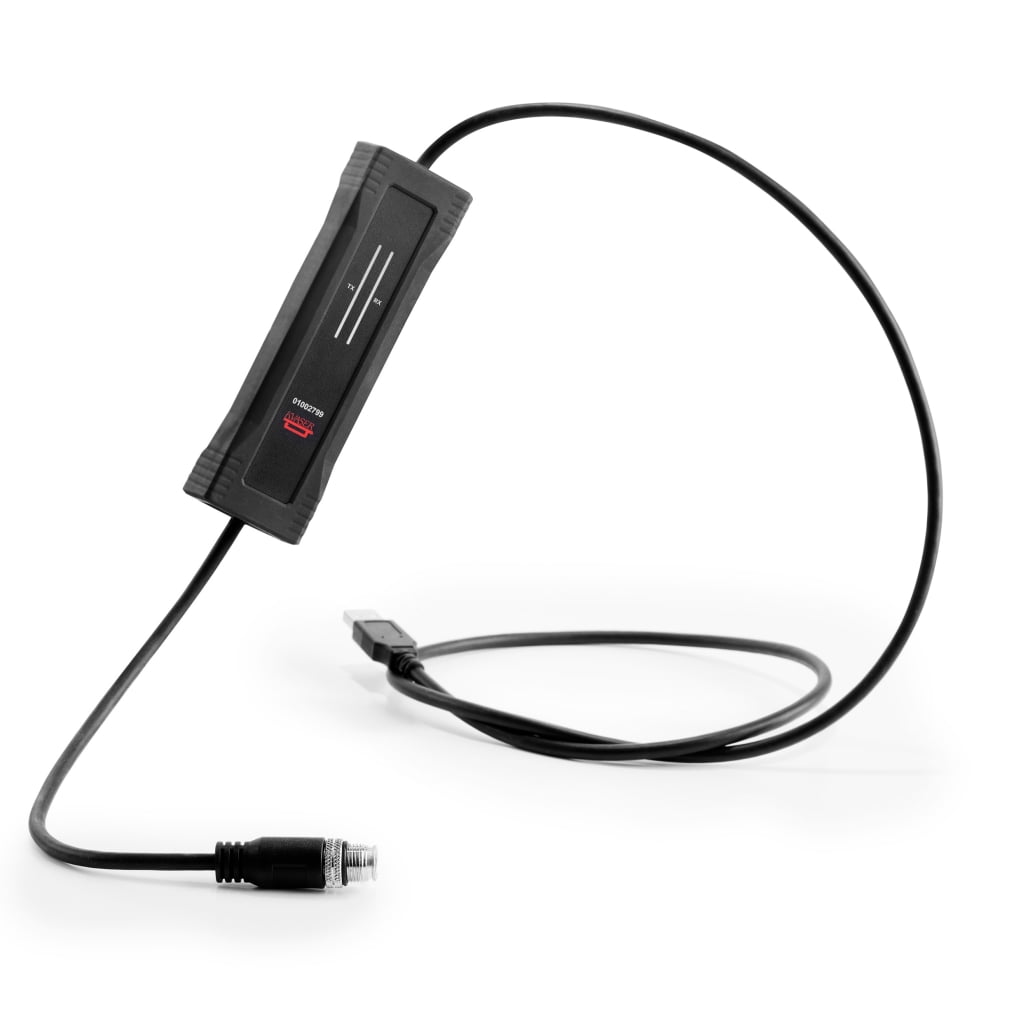
The Kvaser U100 series offers three distinct variants of CAN bus interfaces designed for different industrial needs. The standard U100 provides essential CAN FD functionality in a compact form factor, while the U100P adds improved power options and galvanic isolation for enhanced reliability. The U100P-X variant takes durability further with extended temperature range and additional electromagnetic protection for extreme environments. All three models support both CAN FD and Classical CAN protocols, offering different levels of ruggedness, connectivity options, and environmental protection to match specific application requirements in automotive, marine, energy, and defense sectors.
What are the Kvaser U100 series CAN interfaces?
The Kvaser U100 series consists of compact, high-performance CAN bus interfaces designed for industrial applications requiring reliable CAN communication. These devices serve as the critical bridge between computers and CAN networks, enabling monitoring, analysis, and control of CAN systems across various industries.
At their core, all U100 variants support both CAN FD (Flexible Data-rate) and Classical CAN protocols, allowing data transmission at up to 8 Mbps and 1 Mbps respectively. The series features a durable USB 2.0 interface for computer connectivity, making them versatile tools for engineering teams developing and testing CAN-based systems.
Common features across the U100 family include:
- Support for both CAN FD and Classical CAN
- Single channel configuration
- Compact form factor for portable use
- USB 2.0 connectivity
- Compatible with Kvaser’s API and development tools
- LED indicators for operational status
These interfaces form an essential part of the CAN technology ecosystem, providing the hardware foundation for development, testing, and troubleshooting of industrial automation systems. If you’d like to explore our full range of Kvaser products, you’ll find options to suit various industrial needs.
How does the U100 differ from the U100P variant?
The U100 and U100P differ primarily in their power supply options, connector types, and level of electrical isolation, which significantly impacts their suitability for different application environments.
The standard U100 is USB-powered with a standard D-SUB9 connector, making it ideal for bench testing and development environments. It draws power directly from the USB port, simplifying setup in controlled environments like laboratories and test benches.
In contrast, the U100P offers more flexible power options with:
- Galvanic isolation between the CAN and USB sides, providing protection against ground loops and voltage spikes
- A dedicated power connector allowing external 5-30V DC supply when USB power is insufficient or unreliable
- Phoenix 5-pin screw terminal connector instead of D-SUB9, making it better suited for permanent installations
- Enhanced stability in applications with fluctuating power conditions
This electrical isolation in the U100P makes it particularly valuable in industrial settings where electrical noise, ground potential differences, or power fluctuations could compromise signal integrity or damage equipment. For more specialized connector options, the U100-C variant offers alternative connection possibilities while maintaining the core functionality.
The U100P’s design emphasizes reliability in real-world industrial deployments, while the standard U100 prioritizes simplicity and ease of use in controlled environments.
Introducing the Kvaser U100, the new reference in rugged CAN interface design
What additional features does the U100P-X offer compared to other variants?
The U100P-X represents the most robust variant in the series, offering enhanced specifications specifically designed for extreme environments and mission-critical applications. It builds upon the U100P foundation with several critical improvements.
The most significant enhancement is the extended temperature range, allowing operation in environments from -40°C to +85°C, compared to the standard 0°C to +70°C range of other variants. This makes the U100P-X suitable for outdoor installations, industrial freezers, or hot production environments where temperature fluctuations are common.
Additional protective features include:
- Enhanced electromagnetic interference (EMI) protection, making it more resistant to electrical noise in industrial settings
- Reinforced galvanic isolation between CAN and USB circuits (2500 V compared to standard isolation)
- Superior ESD (electrostatic discharge) protection, reducing vulnerability to static electricity damage
- More robust physical construction to withstand vibration and mechanical stress
- Conformal coating on internal components for moisture and dust resistance
These features make the U100P-X particularly valuable in harsh industrial environments like marine vessels, military applications, outdoor automation systems, and manufacturing floors with extreme electromagnetic interference. The added ruggedness ensures reliable operation when other interfaces might fail due to environmental stressors.
Which Kvaser U100 variant is best for specific industrial applications?
Selecting the ideal U100 variant depends on your specific operating environment, reliability requirements, and installation constraints. Each variant has been optimized for different industrial scenarios.
For standard development and testing environments, the basic U100 is often sufficient. It’s ideal for:
- Software development laboratories
- Educational settings
- Bench testing and diagnostics
- Temporary monitoring setups
The U100P becomes the preferred choice for:
- Permanent installations in industrial control panels
- Settings with unreliable USB power
- Environments with potential ground loops
- Systems requiring more robust electrical connections
- Energy and utility monitoring systems
The U100P-X excels in extreme conditions such as:
- Marine environments with salt spray and temperature variations
- Defense and military applications requiring high reliability
- Outdoor installations exposed to weather extremes
- Manufacturing facilities with high electromagnetic interference
- Transportation and off-highway vehicle systems
For specialized aerospace and high-performance applications, the U100-X1 offers additional capabilities. We recommend exploring our Case study section to understand how these interfaces perform in real-world applications.
How do the U100 variants integrate with embedded systems like Raspberry Pi?
All Kvaser U100 variants offer seamless integration with embedded computing platforms like Raspberry Pi, making them excellent choices for IoT gateways, edge computing nodes, and compact industrial controllers.
Integration is facilitated through Kvaser’s comprehensive software stack, which includes:
- Linux-compatible drivers supporting ARM architectures
- SocketCAN compatibility for standard Linux CAN implementations
- Python, C/C++, and Java APIs for application development
- Sample code and integration examples
- CANlib SDK for advanced functionality
When connecting to Raspberry Pi or similar platforms, power considerations become important. The standard U100 draws power from USB, which may exceed what some embedded systems can provide. In these cases, the U100P with its external power option becomes advantageous, allowing the CAN interface to be powered independently from the embedded system.
For outdoor or industrial embedded applications, the U100P-X offers the necessary environmental protection and temperature range to ensure reliable operation, particularly when the entire system might be subjected to extreme conditions.
Integration typically involves mounting the interface securely, establishing the USB connection, installing appropriate drivers, and configuring the CAN parameters according to your network requirements.
Key takeaways: Choosing the right Kvaser U100 variant for your needs
When selecting among the U100 variants, consider these essential factors to ensure you choose the most appropriate interface for your specific requirements:
- Environmental conditions: For standard indoor environments (0-70°C), the basic U100 or U100P is sufficient. For extreme temperatures (-40°C to +85°C) or harsh conditions, the U100P-X is necessary.
- Power requirements: If USB power is reliable and sufficient, the standard U100 works well. If external power is needed, choose the U100P or U100P-X.
- Electrical isolation: For environments with potential ground loops or electrical noise, the galvanic isolation in U100P and U100P-X provides crucial protection.
- Connection type: Consider whether D-SUB9 (U100) or Phoenix terminals (U100P/P-X) better suit your installation requirements.
- Durability needs: For portable diagnostics, the U100 may suffice; for permanent industrial installations, the U100P or U100P-X offers better longevity.
All variants provide the same core CAN FD functionality, but their physical and electrical characteristics determine their suitability for different deployment scenarios. For development and testing, the standard U100 offers the best value. For industrial deployment, the U100P balances cost and ruggedness. For mission-critical applications in challenging environments, the U100P-X provides the highest reliability.
By matching the interface capabilities to your specific environmental conditions and operational requirements, you can ensure reliable CAN communication while optimizing your investment in CAN bus technology.