Is Kvaser Leaf v3 compatible with Linux and Windows?
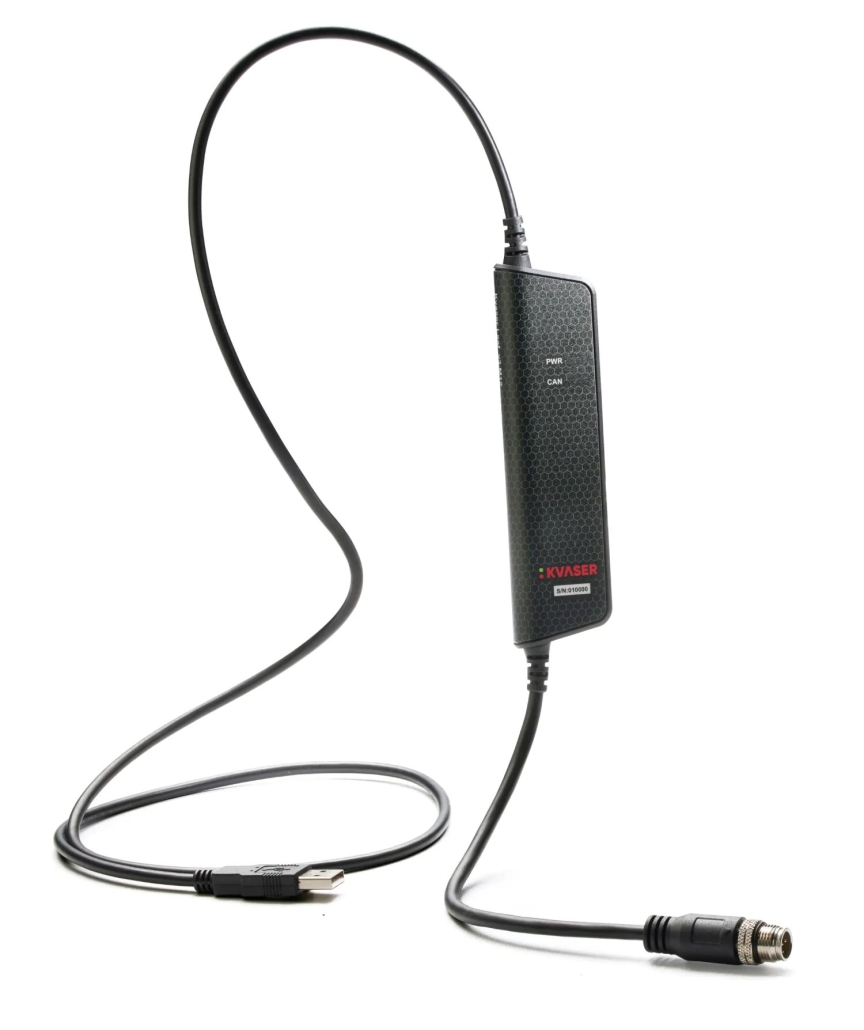
Yes, the Kvaser Leaf v3 (also known as Leaf v3) is fully compatible with both Linux and Windows operating systems. This professional-grade CAN interface provides seamless connectivity for CAN network development and diagnostics across platforms. Kvaser offers comprehensive driver support for Windows 10/11 (32/64-bit) and various Linux distributions, including Ubuntu and Debian. The device requires no special configurations for cross-platform usage, making it an ideal solution for mixed-environment development teams working with CAN and CAN FD protocols.
Understanding the Kvaser Leaf v3 CAN interface
The Kvaser Leaf v3 is a professional CAN interface tool designed to connect computers to Controller Area Network (CAN) buses. This compact USB device serves as a crucial bridge between development computers and CAN networks, enabling engineers to monitor, analyze, and interact with CAN data in real-time.
The Leaf v3 represents Kvaser’s commitment to providing reliable tools for CAN bus development and diagnostics. Its primary purpose is to facilitate seamless communication between your computer’s development environment and CAN-enabled devices, supporting both traditional CAN and the newer CAN FD (Flexible Data-rate) protocol.
Engineers use the Leaf v3 for a variety of tasks including:
- Monitoring CAN traffic for debugging
- Developing and testing CAN-based applications
- Diagnosing issues in automotive and industrial networks
- Recording and analyzing CAN data
- Simulating CAN devices
The device’s plug-and-play nature, combined with Kvaser’s robust software support, makes it an essential tool for professionals working with embedded systems across automotive, industrial automation, and other sectors. We encourage you to explore more Kvaser products to find the perfect match for your CAN development needs.
Is Kvaser Leaf v3 compatible with Linux and Windows?
Yes, the Kvaser Leaf v3 offers comprehensive compatibility with both Linux and Windows operating systems. This cross-platform support is one of the device’s key strengths, allowing development teams to work seamlessly across different environments.
For Windows users, the Leaf v3 supports:
- Windows 10 and 11 (both 32-bit and 64-bit)
- Easy installation via Kvaser’s driver package
- Integration with Kvaser’s Windows-based tools
- Compatible with most Windows-based CAN development software
Linux compatibility includes:
- Support for major distributions (Ubuntu, Debian, etc.)
- SocketCAN integration for standardized access
- Dedicated Linux drivers from Kvaser
- Command-line tools for CAN monitoring and interaction
The Leaf v3’s driver architecture ensures that developers experience consistent performance regardless of operating system. Installation on either platform is straightforward, with Kvaser providing detailed documentation and support resources. This dual-platform compatibility is particularly valuable for teams working in mixed environments or for projects that might need to transition between operating systems during their lifecycle.
The device maintains the same functional capabilities across both platforms, ensuring that development work can proceed smoothly regardless of the operating system in use. This flexibility has made the Leaf v3 a popular choice among professional developers who require reliable cross-platform CAN connectivity.
What CAN protocols does the Kvaser Leaf v3 support?
The Kvaser Leaf v3 supports a comprehensive range of CAN protocols, making it suitable for both legacy systems and cutting-edge applications. Its protocol support includes:
- Classical CAN 2.0A (11-bit identifiers) and 2.0B (29-bit identifiers)
- CAN FD (Flexible Data-rate) with up to 8 Mbps data phase
- ISO 11898-2:2016 compliant physical layer
- Time-stamping with high-resolution accuracy
- Error frame detection and handling
The inclusion of CAN FD support is particularly significant as it allows for much higher data transfer rates than traditional CAN—up to 8 times faster—while maintaining backward compatibility with classical CAN networks. This makes the Leaf v3 ideal for modern automotive and industrial applications where higher bandwidth requirements are becoming increasingly common.
For transmission rates, the Leaf v3 offers:
- Classical CAN: Up to 1 Mbps
- CAN FD: Up to 8 Mbps (data phase)
- Customizable bitrates to match existing network configurations
The device’s protocol implementation includes built-in error handling and diagnostic capabilities, allowing developers to quickly identify and resolve communication issues. This comprehensive protocol support ensures that the Leaf v3 can integrate with virtually any CAN-based system, regardless of its age or specifications.
For professionals working with mixed CAN environments or migrating systems from classical CAN to CAN FD, the Leaf v3’s dual-protocol support provides a smooth transition path while maintaining compatibility with existing hardware.
How does Kvaser Leaf v3 differ from previous models?
The Kvaser Leaf v3 represents a significant technological evolution over its predecessors, offering substantial improvements in several key areas:
- Added CAN FD support for higher data rates (up to 8 Mbps vs. 1 Mbps in older models)
- Enhanced USB connectivity with better compatibility across operating systems
- Improved galvanic isolation for increased reliability in noisy environments
- More robust hardware design for industrial applications
- Advanced timestamping capabilities for precise message sequencing
- Enhanced driver architecture for better cross-platform performance
While maintaining the compact form factor of previous Leaf models, the Leaf v3 offers substantially improved performance. The addition of CAN FD support is particularly significant, as it enables the device to work with modern automotive systems that increasingly rely on this higher-speed protocol for firmware updates, diagnostics, and sensor data transmission.
The Leaf v3 maintains backward compatibility with software developed for previous Leaf models, allowing users to upgrade their hardware without needing to rewrite their applications. This compatibility extends to Kvaser’s API, ensuring that code written for earlier devices will continue to function with the Leaf v3.
For organizations with existing investments in Kvaser products, the transition to the Leaf v3 is designed to be seamless while providing access to new capabilities. The improved isolation and reliability features make the Leaf v3 better suited for demanding industrial environments where electrical noise and harsh conditions are common.
What are the key applications for Kvaser Leaf v3?
The Kvaser Leaf v3’s versatility makes it suitable for a wide spectrum of professional applications across multiple industries:
- Automotive diagnostics and ECU programming
- Industrial automation systems development
- CANopen and J1939 protocol implementation
- Agricultural equipment monitoring and control
- Marine systems integration
- Energy management systems
- Research and educational environments
In automotive diagnostics, the Leaf v3 excels at connecting to vehicle networks for troubleshooting, firmware updates, and data logging. Its CAN FD capabilities make it particularly valuable for modern vehicles where standard CAN is being supplemented or replaced by higher-speed protocols.
For industrial automation, the Leaf v3 serves as a reliable interface for developing and maintaining systems based on CANopen, DeviceNet, and other CAN-derived protocols. The device’s robust design and galvanic isolation make it well-suited for factory floor environments where electrical noise is a concern.
Data logging applications benefit from the Leaf v3’s accurate timestamping and high-speed capabilities, allowing for precise recording of CAN traffic for later analysis. This makes it invaluable for debugging intermittent issues or analyzing system performance over time.
The Leaf v3 also finds application in development environments where engineers need to simulate CAN devices or test new firmware before deployment to actual hardware. Its cross-platform compatibility ensures it can integrate with a variety of development tools and workflows.
For a deeper understanding of how the Kvaser Leaf v3 performs in real-world scenarios, we recommend reviewing our Case study section for detailed implementation examples.
Key takeaways about Kvaser Leaf v3 compatibility
The Kvaser Leaf v3’s cross-platform compatibility offers significant advantages for professionals working with CAN networks. Here are the essential points to remember:
- Full compatibility with both Windows (10/11) and Linux operating systems
- Seamless support for both classical CAN and CAN FD protocols
- Consistent API across platforms, simplifying cross-platform development
- Driver packages available for all supported operating systems
- No performance compromises when switching between environments
For development teams working in mixed environments, the Leaf v3 eliminates the need for different hardware depending on the operating system, streamlining the development process and reducing equipment costs. The consistent behavior across platforms ensures that testing results remain comparable regardless of the development environment.
Engineers implementing the Leaf v3 should consider their specific requirements regarding data rates, protocol support, and integration with existing systems. While the device offers excellent general-purpose capabilities, some specialized applications might benefit from other models in the Kvaser lineup with features tailored to specific use cases.
The Leaf v3’s combination of robust hardware, comprehensive software support, and cross-platform compatibility makes it an excellent choice for professionals seeking a reliable CAN interface for development, testing, or diagnostic applications. Its support for both traditional CAN and CAN FD ensures it will remain relevant as industry standards evolve, providing a future-proof investment for organizations working with CAN networks.