
Does Influx support GPS and IMU integration?
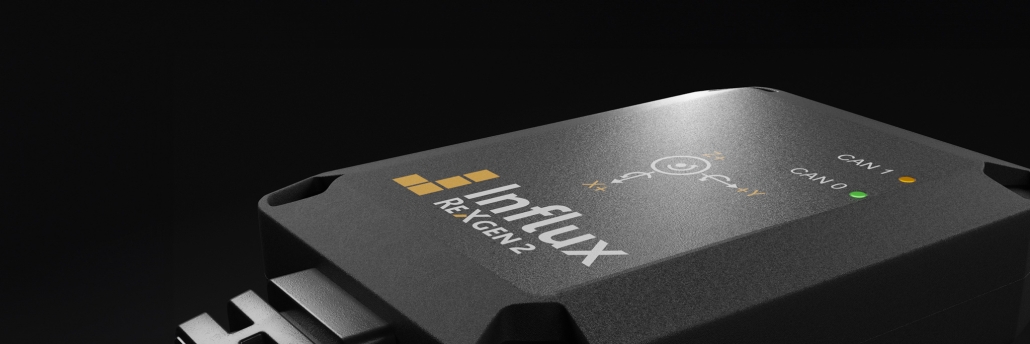
Yes, Influx data loggers fully support GPS and IMU integration across their product range. This integration enables precise vehicle position tracking, motion analysis, and synchronization with CAN bus data for comprehensive diagnostics. Influx’s implementation allows for high-accuracy GPS positioning and detailed motion data capture through Inertial Measurement Units (IMUs), which measure acceleration, orientation, and angular velocity. These capabilities are particularly valuable for vehicle testing, route mapping, and performance analysis where correlating vehicle dynamics with geographical position provides critical insights.
Understanding Influx data logging capabilities
Influx data logging tools represent a sophisticated solution for modern vehicle diagnostics and testing environments. These systems excel at capturing, storing, and analyzing data from various vehicle networks and sensors, with CAN bus communication being a primary focus. The core functionality revolves around real-time data acquisition from multiple sources simultaneously, with precise time synchronization that enables correlating diverse signals.
Professional testing environments benefit from Influx’s comprehensive feature set, including trigger-based logging that initiates recording only when specific conditions are met. This intelligent approach to data capture ensures that critical events are never missed while optimizing storage utilization. The loggers also offer flexible memory options and robust data handling that suits both laboratory testing and field operations.
Influx data loggers are designed with versatility in mind, supporting integration with various hardware platforms including Kvaser interfaces. This adaptability makes them suitable for a wide range of applications from engineering development and validation to production testing and fleet management.
Does Influx support GPS and IMU integration?
Yes, Influx data loggers provide comprehensive support for both GPS and IMU integration. This capability allows users to correlate vehicle network data with precise geographical position and motion information. The integration is implemented through dedicated interfaces that connect directly to the logger, ensuring high-precision synchronization between position data and CAN signals.
For GPS functionality, Influx loggers can connect to standard NMEA-compatible GPS receivers, capturing coordinates, altitude, speed, and heading information. The system processes this data in real-time alongside CAN signals, maintaining temporal alignment that is essential for accurate analysis. The sampling rate is configurable, allowing users to balance between position accuracy and data storage requirements.
IMU integration provides additional dimensions of data by capturing acceleration forces, angular rates, and orientation. This motion data is particularly valuable for understanding vehicle dynamics, suspension performance, and driving behaviour. Influx systems can process multiple IMU channels simultaneously, enabling detailed analysis of vehicle motion in all axes.
The practical applications include route mapping with synchronised vehicle data, performance testing with precise start/stop points, and correlation of vehicle system responses to specific driving conditions or terrain features. All of this data can be visualised and analysed within Influx’s software environment, providing powerful insights that would be impossible with CAN data alone.
How does ReXgen 2 handle GPS and IMU data?
The ReXgen 2 implements advanced GPS and IMU functionality through dedicated hardware interfaces and sophisticated data processing capabilities. This logger features specific connectors for GPS receivers and IMU sensors, allowing for straightforward physical integration. The system supports high sampling rates for both GPS (up to 20Hz) and IMU data (up to 1kHz), ensuring capture of rapid vehicle movements and position changes.
Configuration options within the ReXgen 2 allow users to tailor GPS and IMU data collection to specific testing requirements. Parameters such as sampling frequency, channel selection, and filtering can be adjusted through the intuitive interface. The logger also permits pre-processing of raw sensor data, including drift compensation for IMU measurements and enhanced positioning algorithms that combine GPS with other sources for improved accuracy.
One of the ReXgen 2’s key strengths is its seamless integration of GPS/IMU data with other vehicle data streams. The system treats position and motion information as additional channels within the same timing framework as CAN bus signals, ensuring perfect synchronisation. This unified data structure simplifies subsequent analysis and provides a complete picture of vehicle behaviour correlated with geographical context.
The ReXgen 2 also features built-in visualisation tools that can display GPS tracks overlaid with selected vehicle parameters in real-time, providing immediate feedback during testing operations. This capability is particularly valuable for on-the-fly assessment of vehicle performance under various driving conditions.
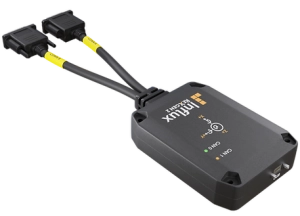
ReXgen2
What are the benefits of GPS/IMU data in CAN diagnostics?
Integrating GPS and IMU data with CAN diagnostics delivers numerous practical advantages that significantly enhance vehicle testing and analysis capabilities. The primary benefit is the ability to contextualise vehicle data with precise location information, creating a spatial dimension to diagnostics that reveals patterns and correlations otherwise invisible.
Route mapping becomes extraordinarily powerful when combined with CAN data, allowing engineers to identify how specific road conditions, gradients, or environments affect vehicle systems. For instance, fuel consumption patterns can be mapped to terrain features, or emissions behaviour can be correlated with urban versus highway driving segments.
Acceleration testing gains precision through GPS/IMU integration, enabling exact measurement of performance metrics like 0-60 mph times with synchronised engine, transmission, and traction control data. This reveals how vehicle systems interact during dynamic manoeuvres, highlighting opportunities for optimisation.
Vibration analysis benefits substantially from IMU data, particularly when investigating ride comfort, suspension performance, or noise issues. By correlating IMU-detected vibrations with CAN signals from relevant systems, engineers can pinpoint the root causes of unwanted vibrations or acoustic phenomena.
Perhaps most valuable is the ability to correlate vehicle systems performance with specific driving scenarios. For example, battery management system behaviour in electric vehicles can be analysed across various driving conditions, revealing how terrain, driving style, and climate impact efficiency and range.
How does Influx compare to other loggers for GPS/IMU functionality?
Influx data loggers distinguish themselves in the GPS/IMU integration space through several key advantages compared to alternative market solutions. Their primary strength lies in the seamless synchronisation between position/motion data and CAN signals, maintaining precise temporal alignment that many competing systems struggle to achieve.
While most advanced loggers offer basic GPS connectivity, Influx systems provide more comprehensive integration options, supporting a wider range of GPS and IMU hardware with minimal configuration requirements. This plug-and-play approach contrasts with some competitors that require complex setup procedures or additional interface hardware.
Data quality is another differentiating factor, with Influx implementing sophisticated filtering and processing algorithms that enhance the accuracy of position and motion data. This is particularly evident in challenging environments where GPS signals may be compromised, such as urban canyons or tunnels.
The analytical capabilities within Influx software offer more powerful tools for working with GPS/IMU data compared to many alternatives. Users can generate complex visualisations that combine geographical information with multiple data channels, creating intuitive representations of vehicle behaviour across different locations and driving conditions.
Integration with other formats and systems also stands out, with Influx supporting industry-standard DBC files for CAN definition and offering flexible export options. This interoperability ensures that GPS/IMU-enhanced datasets can be easily incorporated into broader engineering workflows and third-party analysis tools.
Key takeaways on Influx GPS and IMU integration
Influx data loggers provide robust, well-implemented GPS and IMU integration capabilities that significantly enhance vehicle testing and diagnostic processes. The synchronisation of position and motion data with CAN signals creates a comprehensive testing environment that reveals insights impossible to obtain through traditional methods alone.
For optimal implementation, users should consider their specific testing requirements when configuring GPS sampling rates and IMU parameters. Higher sampling frequencies provide more detailed data but consume additional storage space, requiring a balanced approach based on test duration and objectives.
Future developments in this area are likely to include enhanced integration with mapping services, more sophisticated motion analysis algorithms, and improved filtering for challenging GPS environments. These advancements will further extend the value of combined CAN and position/motion data for engineering applications.
Professional testing scenarios benefit most when GPS/IMU data is incorporated into a structured testing methodology with clear objectives. Whether evaluating vehicle performance, troubleshooting system issues, or validating design changes, the addition of geographical and motion context transforms raw data into actionable intelligence.
For those interested in seeing these capabilities applied to real-world challenges, our Case study section demonstrates how integrated data logging solutions have helped solve complex engineering problems across various industries and applications.