
After Action Report: LAMMA 2026 fair
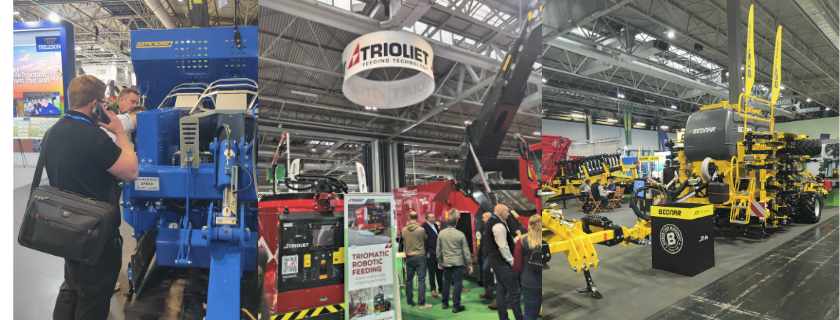
The LAMMA 2026 fair provided valuable insights into the future direction of agricultural machinery technology. The fair showcased a strong industry shift toward smart farming, machine connectivity, electrification and autonomous systems.
Automation & Connectivity
At LAMMA 2026, it was clearly visible that OEMs are increasingly adopting communication technologies such as ISOBUS, CAN FD, and other high-bandwidth fieldbus solutions. These technologies form the backbone of modern machine architecture, enabling seamless communication between implements, controllers, sensors, and user interfaces.
In addition, many exhibitors emphasized the importance of reliable diagnostics, testing, troubleshooting, and electromagnetic compatibility (EMC). As systems grow more complex, the ability to ensure robust communication and detect failures early becomes mission-critical.
Autonomous & Smart Farming Technologies
Autonomous and semi-autonomous solutions took center stage at LAMMA 2026. Multiple vendors showcased systems for autonomous tractors and implements, precision guidance or advanced sensor fusion platforms combining LiDAR, camera, and radar. The agricultural industry is clearly transitioning toward intelligent, self-operating machinery capable of improving productivity. These systems rely heavily on advanced communication, real-time data exchange, and robust safety-critical architectures. TKE’s deep competence in real-time communication frameworks provides a strong foundation for designing and implementing advanced architectures.
Electrification & Hybrid Systems
Electrification was another clear theme throughout the exhibition. Several manufacturers presented prototypes and production-ready solutions featuring electric or hybrid systems, especially in smaller agricultural tractors, material handling equipment and utility and service vehicles.
The shift toward electrification is driven by both regulatory pressures and the demand for quieter, more energy-efficient machinery. However, electrified systems place significantly higher requirements on control architecture, network reliability, and EMC resilience. This creates a growing need for:
- High-quality system modeling
- Robust network design
- EMC testing and validation
- Fault-tolerant communication structures