How does Kvaser support high-speed CAN and CAN FD?
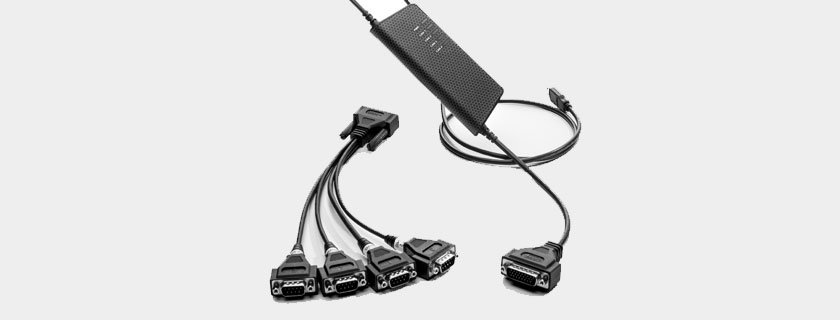
Kvaser provides comprehensive support for both high-speed CAN and CAN FD protocols through its extensive range of hardware interfaces, software tools, and development resources. As a leading manufacturer of CAN bus solutions, Kvaser offers a diverse portfolio of interfaces that seamlessly handle traditional CAN communications at up to 1 Mbit/s and CAN FD (Flexible Data-rate) at speeds reaching 8 Mbit/s with larger data payloads. Their solutions feature robust drivers, flexible APIs for multiple programming languages, and advanced diagnostic capabilities that make them ideal for implementing and troubleshooting complex CAN networks across industrial, automotive, and embedded systems applications.
Understanding Kvaser’s role in CAN communication technology
Kvaser stands as a pioneering force in the CAN (Controller Area Network) ecosystem, providing essential hardware and software solutions that bridge the gap between computers and CAN networks. Founded in 1983, Kvaser has established itself as a trusted provider of high-quality CAN interfaces that support both traditional high-speed CAN and the more advanced CAN FD protocol.
At its core, Kvaser designs and manufactures interfaces that allow engineers and developers to connect, monitor, analyze, and interact with CAN networks. Their product lineup includes USB interfaces, PCIe cards, embedded solutions, and dataloggers, all designed to deliver reliable performance in demanding environments.
Kvaser’s commitment to supporting both protocols reflects their understanding of industry needs – maintaining backward compatibility with existing CAN systems while enabling the advanced capabilities of CAN FD for modern applications. This dual-protocol support positions Kvaser as a future-proof solution provider in the evolving landscape of industrial communications.
What is the difference between high-speed CAN and CAN FD?
High-speed CAN and CAN FD represent two generations of the Controller Area Network protocol, with significant differences in performance and capabilities. Traditional high-speed CAN (also called CAN 2.0) operates at data rates up to 1 Mbit/s and is limited to 8 bytes of payload per message. In contrast, CAN FD (Flexible Data-rate) can achieve speeds up to 8 Mbit/s and support payloads of up to 64 bytes per frame.
The key differences between these protocols include:
- Data rate: CAN FD can switch between a nominal bit rate for the arbitration phase and a higher bit rate for the data phase, significantly increasing throughput
- Frame format: CAN FD introduces new frame formats with additional control bits to manage the flexible data rate and extended payload
- Payload capacity: The 8x increase in payload size (from 8 to 64 bytes) reduces overhead for larger data transfers
- Error detection: CAN FD implements enhanced error detection mechanisms
While CAN FD offers substantial performance improvements, it maintains backward compatibility with traditional CAN networks. This allows for gradual system upgrades without requiring complete infrastructure overhauls, making it particularly valuable for evolving industrial applications.
How do Kvaser’s hardware solutions support both CAN protocols?
Kvaser offers a comprehensive range of hardware interfaces that provide seamless support for both high-speed CAN and CAN FD protocols. Their product lineup includes USB interfaces, PCIe cards, embedded solutions, and dataloggers, all designed to accommodate various implementation needs across different industries.
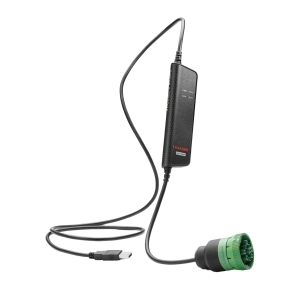
The Kvaser Leaf family of USB interfaces represents their most popular offering, with models supporting either traditional CAN or both CAN and CAN FD. For instance, the Kvaser Leaf Light v2 supports classical CAN, while the Kvaser Leaf Pro HS v2 handles both protocols with high-performance specifications. These devices feature rugged designs, reliable performance in harsh environments, and plug-and-play functionality.
For more demanding applications, Kvaser’s PCIe cards deliver multi-channel capabilities, with options ranging from 2 to 4 channels. Their embedded solutions integrate directly into larger systems, while their dataloggers facilitate CAN and CAN FD network monitoring and analysis without requiring a connected computer.
Most of Kvaser’s newer interfaces feature dual-protocol support, allowing users to work with both traditional CAN and CAN FD networks using the same hardware. This flexibility is particularly valuable for organisations transitioning between protocol generations or maintaining mixed-protocol environments.
What software and programming languages can be used with Kvaser devices?
Kvaser provides extensive software support through its CANlib SDK (Software Development Kit), enabling developers to integrate Kvaser hardware with numerous programming languages and environments. The primary programming languages supported include C, C++, C#, Python, and Java, giving developers flexibility to work within their preferred environment.
The Kvaser API (Application Programming Interface) offers comprehensive functions for configuring interfaces, sending and receiving messages, setting up filters, and managing error handling. This standardised API works consistently across Kvaser’s product range, meaning code developed for one Kvaser interface will typically work with others.
Beyond direct programming support, Kvaser hardware integrates with popular development tools and environments including:
- LabVIEW – through dedicated drivers and example VI files
- MATLAB/Simulink – via the Vehicle Network Toolbox
- CANalyzer/CANoe – through vendor-neutral CAN interfaces
- J1939 protocol stacks – for heavy vehicle applications
Kvaser also offers its own diagnostic software tools, including Kvaser CanKing for basic message monitoring and Kvaser CANtegrity for advanced network diagnostics. These tools provide valuable capabilities for debugging and analysing CAN networks during development and troubleshooting phases.
How are Kvaser solutions implemented in different industries?
Kvaser’s CAN and CAN FD solutions find applications across diverse industries where reliable communication between electronic control units is essential. In the automotive sector, Kvaser interfaces facilitate vehicle diagnostics, ECU programming, and development testing for both conventional and electric vehicles. Engineers use these tools to access vehicle data, troubleshoot problems, and validate new designs.
In industrial automation, Kvaser devices enable communication with CAN bus technology in manufacturing equipment, robotics, and process control systems. Their robust design makes them suitable for harsh factory environments, while their reliable performance ensures consistent operation in critical production scenarios.
The marine industry utilises Kvaser interfaces for vessel monitoring systems, engine control, and navigation equipment integration. Energy sector implementations include wind turbine control systems, power distribution monitoring, and battery management systems, particularly in renewable energy applications.
Research and development facilities across all industries leverage Kvaser’s hardware for prototyping new CAN-based systems, with their flexibility supporting rapid development cycles. To see real-world implementations, explore our Case study section for detailed examples of successful CAN and CAN FD projects.
Key takeaways about Kvaser’s CAN technology support
Kvaser provides robust support for both high-speed CAN and CAN FD protocols through a comprehensive ecosystem of hardware interfaces, software tools, and development resources. Their product portfolio offers solutions ranging from simple single-channel interfaces to sophisticated multi-channel systems capable of handling complex network configurations.
When selecting Kvaser products for specific applications, consider these key factors:
- Protocol requirements (CAN, CAN FD, or both)
- Number of channels needed
- Physical interface type (USB, PCIe, embedded)
- Environmental conditions (temperature range, vibration resistance)
- Software integration requirements
- Data logging and analysis needs
Kvaser’s commitment to backward compatibility ensures that investments in their technology remain valuable even as network requirements evolve. Their solutions provide the performance, reliability, and flexibility needed for modern CAN bus implementations across industrial, automotive, marine, and energy applications.
For organisations looking to implement or upgrade CAN networks, Kvaser offers a future-proof path that accommodates both traditional high-speed CAN and the advanced capabilities of CAN FD. We invite you to explore Kvaser products to find the optimal solution for your specific CAN communication needs.