
What use cases are ideal for the Leaf v3 interface?
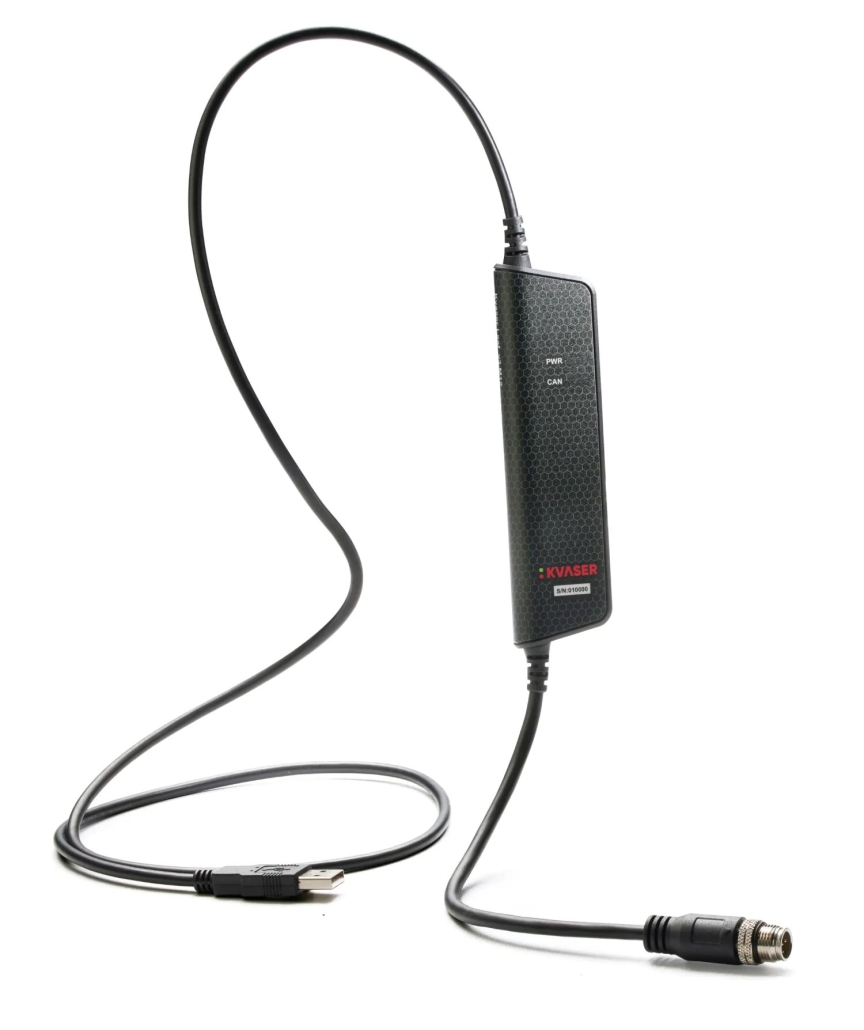
The Kvaser Leaf v3 CAN interface is ideally suited for professional applications requiring reliable, high-performance CAN bus communication with modern technical specifications. This advanced interface excels in automotive diagnostics, industrial automation, research and development, and field service environments where both CAN and CAN FD protocols are utilised. With its robust design, galvanic isolation, and cross-platform compatibility, the Leaf v3 is particularly valuable for applications demanding stable connections in electronically noisy environments, high-speed data transmission, and comprehensive diagnostic capabilities.
Understanding the Kvaser Leaf v3 CAN interface: features and capabilities
The Kvaser Leaf v3 is a versatile USB-to-CAN interface that bridges computers with CAN networks through standard USB ports. This compact device supports both classical CAN and CAN FD (Flexible Data-rate) protocols, offering data rates up to 8 Mbps in FD mode compared to the traditional 1 Mbps in classical CAN.
The Leaf v3’s technical specifications include galvanic isolation that protects connected equipment from voltage differences and electrical noise, making it ideal for industrial environments. It’s compatible with both Windows and Linux operating systems, ensuring flexibility across different computing platforms.
Key capabilities include:
- Support for single-wire CAN applications
- USB 2.0 connectivity for simple plug-and-play operation
- Auto-recovery from bus-off states
- Silent mode for non-intrusive bus monitoring
- Advanced error detection capabilities
These features make the Leaf v3 a powerful tool for engineers and technicians working with CAN networks. To explore the complete range of Kvaser products available, visit our dedicated product section.
What makes Leaf v3 different from previous Leaf models?
The Leaf v3 represents a significant evolution from previous generations, with the most notable improvement being the addition of CAN FD support. This capability allows for much higher data transfer rates and larger message sizes than older models that only supported classical CAN.
Performance enhancements in the Leaf v3 include:
- Increased message throughput for handling dense CAN traffic
- Enhanced buffer management to prevent message loss
- Improved timing accuracy for precise timestamping
- More robust galvanic isolation for better protection
- Advanced error handling capabilities
Regarding backward compatibility, the Leaf v3 maintains functionality with existing CAN systems while offering the flexibility to work with newer CAN FD networks. The physical form factor has been optimised for portability while maintaining durability for field use.
Software compatibility has also been improved, with enhanced driver support and API consistency that makes transitioning from older models straightforward for developers and technicians familiar with the Kvaser ecosystem.
Which industries benefit most from using the Leaf v3 interface?
The Leaf v3 interface delivers exceptional value across multiple sectors where reliable CAN communication is essential. The automotive industry is perhaps the most prominent beneficiary, using Leaf v3 for vehicle diagnostics, ECU programming, and testing advanced driver assistance systems.
In the marine sector, the Leaf v3’s galvanic isolation is particularly valuable, protecting sensitive electronic equipment from electrical inconsistencies common in maritime environments. This makes it ideal for monitoring and diagnosing vessel control systems and navigation equipment.
The energy industry leverages the Leaf v3 for monitoring and controlling power generation equipment, where its reliability and ability to function in electrically noisy environments prove invaluable. Similarly, the defence sector utilises Leaf v3 for vehicle diagnostics and system integration testing where robust performance is non-negotiable.
Off-highway vehicle manufacturers and service providers benefit from the Leaf v3’s portability and durability when diagnosing agricultural, construction, and mining equipment in challenging field conditions. For a deeper understanding of real-world applications, review our Case study section that highlights practical implementations.
How does Leaf v3 perform in automotive diagnostic applications?
In automotive diagnostic environments, the Leaf v3 interface delivers exceptional performance through its ability to communicate with both traditional CAN and modern CAN FD networks found in newer vehicles. This dual-protocol capability means technicians need only one device to work across multiple vehicle generations.
For ECU programming and firmware updates, the Leaf v3’s higher bandwidth with CAN FD significantly reduces flash time, increasing workshop efficiency and reducing vehicle downtime. The reliable connection ensures that critical programming sequences aren’t interrupted, preventing potential ECU damage.
Fleet management systems benefit from the Leaf v3’s consistent performance when downloading vehicle data and updating configuration parameters across multiple vehicles. Its cross-platform compatibility means it works seamlessly with various diagnostic software packages on different operating systems.
In automotive testing environments, the Leaf v3’s precise timestamping capabilities allow engineers to accurately correlate CAN messages with other events, essential for debugging complex systems like autonomous driving features. The high message throughput also ensures no critical data is missed when monitoring busy vehicle networks.
What role does Leaf v3 play in industrial data logging and automation?
In industrial settings, the Leaf v3 interface serves as a critical link for monitoring and controlling machinery through CAN networks. Its galvanic isolation provides essential protection in environments with electrical noise, ground loops, or voltage differences that could otherwise damage connected equipment.
For data acquisition applications, the Leaf v3 excels at continuous logging of sensor data from industrial machinery, enabling predictive maintenance and performance analysis. The high-speed capabilities of CAN FD support allow for capturing more detailed information from sophisticated modern sensors with higher data output requirements.
In process control systems, the Leaf v3 facilitates reliable communication between supervisory computers and CAN-enabled controllers, ensuring commands are delivered accurately and system status is monitored in real-time. This is particularly valuable in manufacturing environments where precise timing and coordination between different system components are essential.
The Leaf v3 also integrates well with industrial standards like CANopen, providing a robust platform for complex machine-to-machine communication protocols. Its ability to handle sustained high message rates makes it suitable for busy industrial networks with multiple nodes exchanging information continuously.
Key takeaways: choosing the right interface for your CAN applications
When selecting a CAN interface for your specific application, the Leaf v3 proves most valuable in scenarios requiring high-speed data transfer, cross-platform compatibility, and robust electrical isolation. Its dual protocol support makes it particularly suitable for environments where both traditional CAN and CAN FD networks need to be accessed.
Consider the Leaf v3 when:
- Working with newer vehicles or machinery supporting CAN FD
- Operating in electrically noisy environments where isolation is crucial
- Requiring portable diagnostics for field service operations
- Developing applications that need to run on different operating systems
- Implementing systems that may need to scale or adapt to future requirements
Implementation is straightforward with comprehensive drivers and SDK support. For organisations new to CAN technology, training resources and technical support are available to ensure successful deployment.
The Leaf v3 represents a future-proof investment that balances current needs with adaptability to emerging standards in the CAN ecosystem. Its reliability, performance characteristics, and broad compatibility make it a valuable tool for professionals across multiple industries working with CAN networks.