What is the Kvaser Leaf v3 and how is it used?
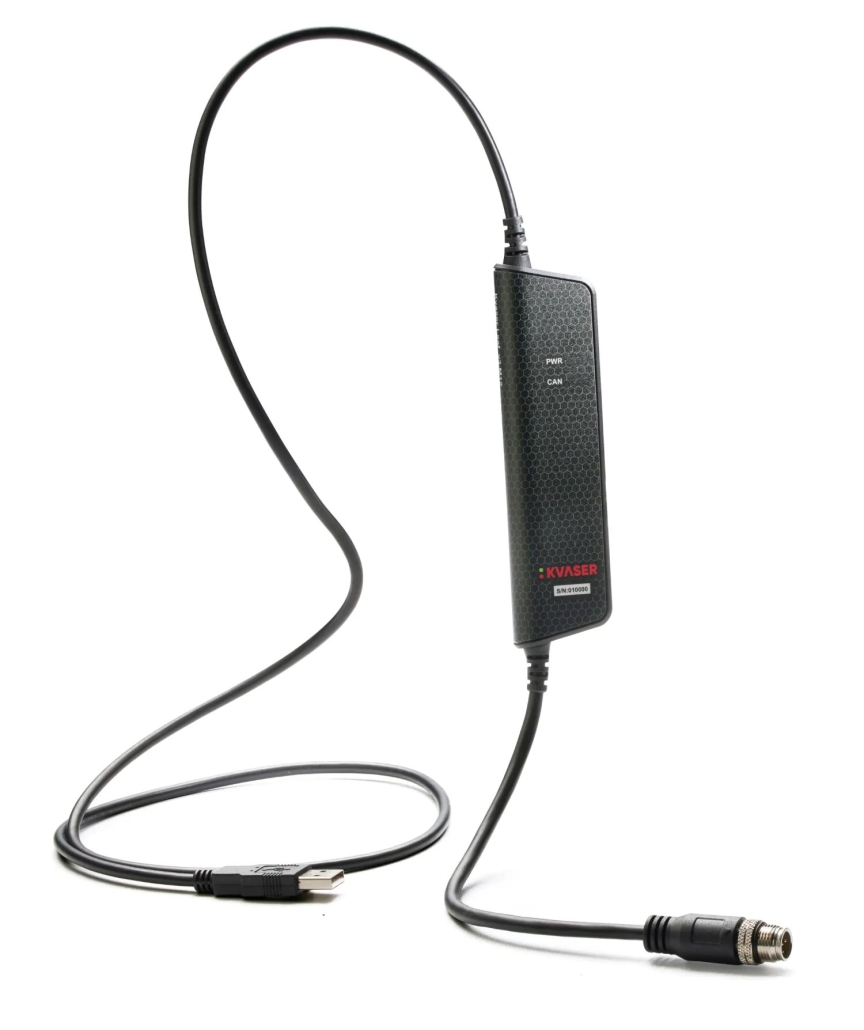
The Kvaser Leaf v3 is a professional-grade CAN bus interface device that allows engineers and developers to connect computers to Controller Area Network (CAN) systems. It serves as a critical tool for programming, monitoring, and troubleshooting CAN networks in automotive, industrial automation, and other technical applications. This USB-connected interface supports advanced protocols like CAN FD (Flexible Data-rate) and provides reliable, high-speed communication between computers and CAN networks, making it essential for development, testing, and diagnostic procedures in modern electronic systems.
Understanding the Kvaser Leaf v3: An introduction to CAN bus technology
The Kvaser Leaf v3 represents a crucial link between computer systems and CAN bus networks, which form the backbone of communication in modern vehicles and industrial equipment. As a professional CAN interface tool, it translates data between USB and CAN protocols, allowing engineers to access, analyze, and manipulate CAN messages.
CAN bus technology enables multiple electronic control units (ECUs) to communicate without a central host computer, creating reliable networks for critical systems. The Leaf v3 taps into this architecture, providing developers with visibility and control over these complex networks.
For engineers working with vehicle networks or industrial automation, the Leaf v3 offers a gateway to monitor real-time data, program ECUs, conduct diagnostics, and develop new CAN-based systems. Its significance lies in combining professional-grade reliability with user-friendly operation, making advanced CAN bus development accessible to both experts and those newer to the field.
What is the Kvaser Leaf v3 and what technical features does it offer?
The Kvaser Leaf v3 is a compact, USB-connected CAN bus interface that serves as a bridge between computers and CAN networks. Its technical capabilities make it suitable for professional development and diagnostic applications in various industries.
The Leaf v3 supports both standard CAN and CAN FD protocols, with the latter enabling flexible data rates up to 8 Mbps. This allows for significantly faster data transfer compared to traditional CAN. The device also supports single-wire CAN operations, expanding its compatibility with various systems.
Key technical specifications include:
- USB 2.0 connectivity for easy computer integration
- Galvanic isolation to protect connected equipment
- 9-pin D-SUB connector for standard CAN connections
- Auto-recovery function for optimal operation
- Lightweight, portable design (approximately 70g)
- Status LED indicators for operational feedback
- Built-in diagnostics for network troubleshooting
The Leaf v3’s hardware architecture includes a high-performance microcontroller that processes CAN messages with minimal latency, making it suitable for time-sensitive applications and real-time monitoring of critical systems.
How does the Kvaser Leaf v3 compare to previous Leaf models?
The Kvaser Leaf v3 represents a significant evolution from its predecessors, offering substantial improvements in performance, functionality, and compatibility. Where earlier Leaf models served their purpose well, the Leaf v3 brings CAN interface technology firmly into the modern era.
The most notable advancement is the addition of CAN FD support, which wasn’t available in original Leaf models. This allows for much higher data transmission rates and larger message sizes—critical for today’s data-intensive automotive and industrial applications.
Additional improvements include:
- Enhanced galvanic isolation for better protection of connected systems
- Improved message handling capacity and reduced latency
- More robust error handling and diagnostic capabilities
- Better compatibility with modern operating systems
- Enhanced driver architecture for improved stability
The Leaf v3 also features a more efficient power management system compared to earlier versions, making it suitable for extended use in field operations. Its updated firmware allows for future upgrades, providing longevity that previous models couldn’t match.
If you’re interested in exploring the full range of capabilities across different models, we recommend checking out Kvaser products to find the ideal solution for your specific requirements.
What operating systems and software are compatible with the Kvaser Leaf v3?
The Kvaser Leaf v3 offers broad compatibility across major operating systems and software platforms, making it a versatile tool for different development environments. It supports both Windows (7, 8, 10, 11) and Linux operating systems, with dedicated drivers for each platform.
On the software front, the Leaf v3 integrates with Kvaser’s API libraries (CANlib) which provide developers with programming interfaces in C, C++, C#, Python, and other languages. This flexibility enables implementation across various development environments and applications.
Compatible software includes:
- Kvaser’s own diagnostic and monitoring tools (Kvaser CanKing)
- Third-party CAN analysis software like Vector CANalyzer
- Custom applications developed with Kvaser’s SDK
- Popular industrial automation software supporting CANopen
- Automotive diagnostic platforms that use CAN protocols
The device also integrates with many industry-specific applications through its standardized interface. Driver installation is straightforward, with automatic updates available to ensure ongoing compatibility with the latest software environments.
For real-world implementation examples, you might find our Case study section helpful, offering insights into how various companies have deployed these interfaces in practical scenarios.
How is the Kvaser Leaf v3 used in automotive diagnostics and industrial applications?
The Kvaser Leaf v3 serves as a versatile tool across multiple industries, with particularly strong applications in automotive diagnostics and industrial automation. Its ability to interface with CAN networks makes it invaluable for professionals working with complex electronic systems.
In automotive diagnostics, technicians and engineers use the Leaf v3 to:
- Access vehicle ECUs for diagnostic trouble code (DTC) reading and clearing
- Program or update firmware in vehicle control modules
- Monitor real-time data streams from sensors and actuators
- Perform functional testing of vehicle systems
- Develop and validate new automotive software
For industrial applications, the Leaf v3 is frequently employed in:
- Data logging from industrial machinery and equipment
- Implementing CANopen systems for factory automation
- Monitoring and controlling industrial processes
- Developing embedded systems for manufacturing equipment
- Troubleshooting communication issues in complex machinery
The device’s galvanic isolation makes it particularly valuable in harsh industrial environments where electrical interference is common. Its portability also allows field technicians to perform diagnostics and updates on-site, reducing equipment downtime.
Key takeaways: Why the Kvaser Leaf v3 is essential for CAN bus development
The Kvaser Leaf v3 has established itself as a fundamental tool for professionals working with CAN-based systems, offering a compelling combination of reliability, performance, and usability that addresses core development needs.
Its support for both traditional CAN and advanced CAN FD protocols positions it as a future-proof investment suitable for both current projects and upcoming technological developments. The device’s robust construction and galvanic isolation provide the durability required for professional use in challenging environments.
Engineers benefit from the Leaf v3’s intuitive operation coupled with sophisticated capabilities, creating an accessible yet powerful platform for CAN development. Its broad compatibility with operating systems and software solutions ensures seamless integration into existing workflows and development environments.
Perhaps most importantly, the Leaf v3 removes barriers between developers and CAN networks, enabling efficient troubleshooting, precise monitoring, and streamlined development processes. This translates to reduced development cycles, faster problem resolution, and ultimately more reliable CAN-based systems.
Whether you’re developing automotive systems, industrial automation solutions, or other CAN-enabled technologies, the Kvaser Leaf v3 provides the connectivity, performance, and reliability needed to accomplish your goals efficiently and effectively.