Does Leaf v3 support CAN FD and single-wire CAN?
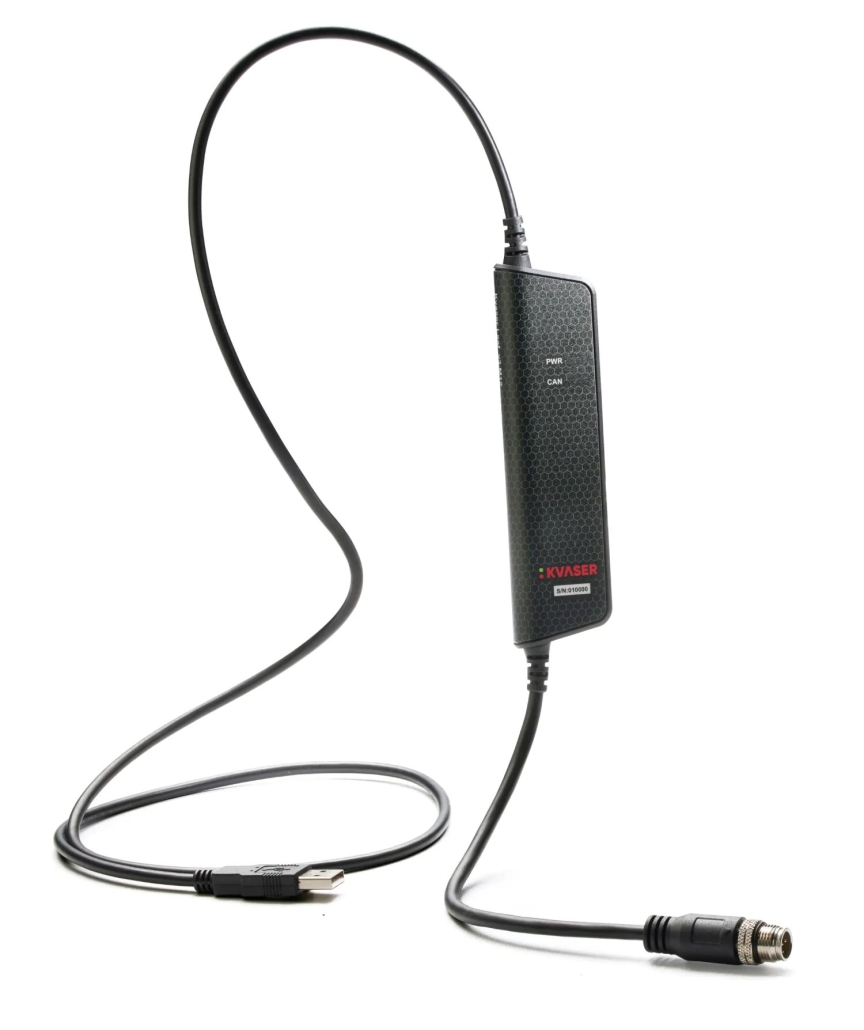
The Kvaser Leaf v3 is a professional-grade CAN bus interface that fully supports both CAN FD (Flexible Data-rate) and regular CAN protocols, but does not support single-wire CAN natively. This advanced interface offers significantly higher bandwidth capabilities compared to standard CAN, with CAN FD data rates up to 8 Mbps. For users requiring single-wire CAN functionality, additional converter hardware is necessary. The Leaf v3 features galvanic isolation, USB connectivity, and robust compatibility with various operating systems, making it a versatile solution for automotive diagnostics, industrial automation, and embedded systems development.
What is the Kvaser Leaf v3 CAN interface?
The Kvaser Leaf v3 is a professional-grade CAN bus interface device designed for connecting computers to CAN networks via USB. As the third generation of Kvaser’s popular Leaf product line, this compact yet powerful tool serves as an essential bridge between development environments and CAN-enabled devices or systems.
The Leaf v3 functions primarily as a communication gateway, enabling engineers, developers, and technicians to monitor, analyze, and interact with CAN networks. It translates CAN messages into a format accessible by computers, allowing for programming, debugging, diagnostics, and data logging of CAN-based systems.
In the competitive CAN interface market, the Leaf v3 positions itself as a professional-grade solution balancing performance, reliability, and cost-effectiveness. The Leaf family has evolved significantly since its introduction, with each iteration bringing enhanced capabilities and specifications to meet the growing demands of modern industrial and automotive applications.
For those looking to explore the full range of CAN interface solutions, we recommend checking out all Kvaser products to find the perfect match for your specific requirements.
Does Kvaser Leaf v3 support CAN FD and single-wire CAN?
Yes, the Kvaser Leaf v3 fully supports CAN FD (Flexible Data-rate), but does not natively support single-wire CAN. This advanced interface is specifically designed to handle both classical CAN and the newer CAN FD protocol, which offers significant advantages for modern applications.
The CAN FD capabilities of the Leaf v3 enable it to transmit larger data packets at higher speeds compared to standard CAN. While traditional CAN is limited to 8 bytes per message at up to 1 Mbps, CAN FD allows for up to 64 bytes per message with data phase rates reaching 8 Mbps. This substantial improvement in bandwidth makes the Leaf v3 particularly valuable for data-intensive applications.
Regarding single-wire CAN compatibility, the Leaf v3 does not support this protocol out of the box. Single-wire CAN (also known as SAE J2411) uses a different physical layer than standard CAN and requires specific hardware. However, users needing single-wire CAN functionality can employ external converter hardware that bridges between single-wire CAN and the standard two-wire CAN that the Leaf v3 supports.
Implementation considerations when using the Leaf v3 with CAN FD include:
- Ensuring your network supports CAN FD if utilizing those features
- Configuring proper arbitration phase and data phase bit rates
- Understanding that mixing CAN FD and classical CAN nodes requires careful planning
- Recognizing that while backward compatible with classical CAN, optimal performance comes in full CAN FD networks
How does Leaf v3 compare to previous Kvaser models?
The Kvaser Leaf v3 represents a significant evolution from its predecessors, with substantial improvements in several key areas. The most notable advancement is the addition of full CAN FD support, which was absent in earlier Leaf models that only handled classical CAN.
Performance-wise, the Leaf v3 offers dramatically increased data throughput capabilities. While the original Leaf and Leaf Light were limited to the standard CAN maximum of 1 Mbps, the Leaf v3 supports data phase rates up to 8 Mbps with CAN FD. This eight-fold increase in bandwidth opens up new possibilities for data-intensive applications that were previously impractical with older interfaces.
Hardware specifications have also seen meaningful upgrades. The Leaf v3 features enhanced galvanic isolation between the CAN and USB sides, providing better protection against ground loops and electrical interference. The device also benefits from improved temperature range tolerance and more robust construction for industrial environments.
Another significant advancement in the Leaf v3 is its message buffering capabilities. It can handle more messages in its internal buffer compared to previous generations, reducing the risk of data loss during high-traffic periods or when the host computer experiences processing delays.
The newer USB connectivity in the Leaf v3 also provides better power management and compatibility with modern computing systems, addressing limitations found in older models. These improvements collectively make the Leaf v3 a more capable and reliable tool for modern CAN development and diagnostics.
What operating systems and software are compatible with Kvaser Leaf v3?
The Kvaser Leaf v3 offers broad compatibility across multiple operating systems and software environments. For operating systems, it provides official support for:
- Windows 10 and 11 (32-bit and 64-bit)
- Windows 7 and 8 (legacy support)
- Linux (through the SocketCAN interface)
- macOS (via third-party drivers)
Driver support is comprehensive, with Kvaser providing regularly updated drivers that ensure optimal performance and compatibility with the latest OS versions. The Leaf v3 uses a standard USB interface, which simplifies connection to most modern computers without requiring special adapters.
For software integration, the Leaf v3 works with numerous development environments and diagnostic tools. It’s compatible with industry-standard APIs like J2534 pass-through programming and Kvaser’s own CANlib SDK. This allows seamless integration with various software packages including:
Development tools like CANoe, BUSMASTER, and CANalyzer are fully compatible with the Leaf v3, as are numerous proprietary diagnostic applications used in automotive and industrial settings. The device also integrates well with popular programming languages through dedicated libraries, including C++, C#, Python, and Java.
For those working on specific applications, we recommend reviewing our Case study section to see how others have successfully implemented Kvaser interfaces in various environments.
What are the practical applications for Kvaser Leaf v3 in industry?
The Kvaser Leaf v3 finds wide application across numerous industries thanks to its versatile capabilities and robust protocol support. In automotive diagnostics, it serves as an essential tool for ECU programming, fault code reading, and vehicle network analysis. The CAN FD support makes it particularly valuable for modern vehicles with increasingly complex networks and higher bandwidth requirements.
In industrial automation, the Leaf v3 enables monitoring and configuration of CAN-based control systems. Engineers use it to commission machinery, troubleshoot communication issues, and integrate new components into existing networks. The galvanic isolation feature proves especially valuable in electrically noisy industrial environments, preventing ground loops and protecting connected equipment.
For data logging applications, the Leaf v3 excels at capturing high-speed CAN traffic for later analysis. This proves invaluable during product development, field testing, and performance optimization. The higher bandwidth of CAN FD support allows for more comprehensive data collection without message loss, even in systems with intensive communication requirements.
Research and development teams leverage the Leaf v3 for prototyping and testing new CAN-based systems. The interface provides a reliable connection between experimental hardware and development software, facilitating rapid iteration and debugging. Its compatibility with CANopen and other higher-level protocols expands its utility across diverse projects.
The Leaf v3 also finds application in specialized fields like marine systems, renewable energy monitoring, medical equipment development, and agricultural machinery diagnostics – anywhere CAN networks require professional-grade analysis and interaction tools.
Key takeaways: Is Kvaser Leaf v3 the right CAN interface for your needs?
The Kvaser Leaf v3 represents an excellent choice for professionals requiring a reliable, high-performance CAN interface with modern protocol support. Its CAN FD capabilities make it future-proof for evolving applications with increasing bandwidth demands, while maintaining backward compatibility with classical CAN networks.
When determining if the Leaf v3 aligns with your requirements, consider these key factors:
- If you need CAN FD support for higher data rates and larger messages, the Leaf v3 delivers excellent performance
- If your application involves single-wire CAN, be aware that additional converter hardware will be necessary
- For users requiring galvanic isolation for electrical protection, the Leaf v3 provides this critical feature
- Consider your operating system compatibility needs – the Leaf v3 works with most major platforms
- Evaluate whether you need one or two CAN channels for your application (the Leaf v3 provides one channel)
For most industrial, automotive, and research applications involving standard two-wire CAN or CAN FD, the Leaf v3 offers an optimal balance of capabilities, reliability, and value. Its professional-grade specifications ensure it can handle demanding environments, while its widespread software compatibility makes integration straightforward.
For applications with specialized requirements such as multi-channel monitoring or J1939 heavy-duty protocols, exploring the broader Kvaser product line may reveal more tailored solutions. The Leaf v3 excels as a versatile single-channel interface that will serve most standard CAN and CAN FD applications admirably for years to come.