
What data logging features does Influx offer?
Influx offers comprehensive data logging features specially designed for CAN bus diagnostics and vehicle testing. Their solutions include high-capacity memory options, sophisticated trigger-based logging, extensive hardware compatibility, and integrated GPS/IMU functionality. Influx data loggers provide secure data handling with support for industry-standard formats like DBC, making them ideal for professional fleet management, vehicle testing, and system diagnostics applications across various industries.
Understanding Influx data logging capabilities for CAN bus diagnostics
Influx data logging solutions are specifically engineered to excel in CAN bus diagnostics environments, offering powerful tools for modern vehicle and system testing applications. These data loggers provide real-time monitoring capabilities that capture and analyse complex CAN communications across automotive, marine, and industrial systems.
The comprehensive logging capabilities allow engineers and technicians to record data from multiple CAN channels simultaneously, making them invaluable for troubleshooting intermittent issues and validating system performance. With high-speed sampling rates and precise timestamp accuracy, Influx loggers can identify communication patterns and anomalies that might otherwise remain undetected.
Beyond basic logging, these systems offer advanced filtering options to focus on specific message IDs or data patterns, reducing noise and helping professionals pinpoint exactly what they need to analyse. This targeted approach to data collection significantly streamlines the diagnostic process in complex vehicle systems.
What are the key features of Influx ReXgen data loggers?
The Influx ReXgen data logger product line, including the advanced ReXgen 2, delivers exceptional technical capabilities designed for professional diagnostic environments. These devices offer multi-channel CAN interfaces with support for various protocols including CAN FD, allowing simultaneous monitoring of multiple networks.
Memory options are flexible and expansive, with configurations supporting up to 32GB of storage that can accommodate weeks of continuous logging. This extensive capacity ensures no critical data is lost during extended test sessions or when capturing intermittent issues that only occur over prolonged periods.
Input/output capabilities are equally impressive, featuring:
- Multiple CAN channels with CAN FD support
- LIN interface compatibility
- Analog and digital inputs for sensor integration
- SD card slots for easy data transfer
- USB connectivity for configuration and real-time monitoring
The ReXgen series is particularly valued for its rugged design, making it suitable for harsh testing environments where consumer-grade equipment would fail. The intuitive software interface allows for quick setup of logging parameters and straightforward data analysis, significantly reducing the learning curve for new users.
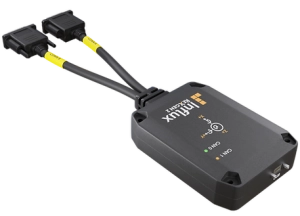
ReXgen2
How does Influx handle trigger-based logging and event capture?
Influx excels in trigger-based logging functionality, providing sophisticated event capture mechanisms that optimise data collection for specific testing scenarios. The system allows users to define precise trigger conditions based on CAN message IDs, data values, or combinations of parameters that initiate recording only when relevant events occur.
This intelligent approach to data logging offers several advantages:
- Pre-trigger buffering that captures data seconds before the trigger event
- Post-trigger recording to document system behaviour following an event
- Multiple trigger conditions that can be combined using logical operators
- Cascading triggers for complex diagnostic scenarios
Engineers can configure triggers to activate based on specific threshold values, rate-of-change conditions, or pattern recognition within the CAN traffic. This targeted logging significantly reduces the volume of data that needs to be analysed while ensuring that critical events are never missed.
For intermittent fault diagnosis, the system can be configured to maintain a continuous buffer, only saving data permanently when trigger conditions are met. This approach conserves storage space while providing comprehensive documentation of problematic events, making it invaluable for fleet diagnostics and vehicle validation testing.
What hardware compatibility does Influx offer with Kvaser and other systems?
Influx data loggers provide extensive compatibility with Kvaser hardware and other industry-standard systems, offering seamless integration capabilities across diverse testing environments. This compatibility extends to both hardware interfaces and communication protocols, ensuring flexibility in deployment scenarios.
The system supports standard protocols including:
- CAN 2.0A/B and CAN FD
- LIN (Local Interconnect Network)
- J1939, CANopen, and NMEA 2000
- OBD-II diagnostics
Influx loggers are designed to work alongside Kvaser interfaces and adapters, creating a complementary ecosystem that leverages the strengths of both manufacturers. This interoperability extends to software compatibility, with support for industry-standard data formats that facilitate seamless workflows between different diagnostic tools.
For specialised applications, Influx provides custom interface options and adapters that bridge proprietary systems with standard logging solutions. This flexibility makes Influx data loggers particularly valuable in multi-vendor environments where compatibility challenges often arise.
How do Influx data loggers support GPS and IMU functionality?
Influx data logging solutions offer comprehensive GPS and Inertial Measurement Unit (IMU) support, enabling sophisticated location-synchronized diagnostics for vehicle testing applications. This integrated approach allows engineers to correlate CAN bus data with precise geographical position and vehicle dynamics information.
The GPS functionality provides:
- Accurate position tracking with sub-meter precision
- Speed and heading data synchronized with CAN messages
- Timestamp correlation between vehicle location and system events
- Route mapping capabilities for test drive analysis
Complementing this, the IMU functionality captures comprehensive motion data including acceleration, deceleration, pitch, roll, and yaw. This information is particularly valuable when diagnosing issues that manifest only under specific driving conditions or when validating vehicle stability systems.
For advanced testing scenarios, these capabilities allow teams to recreate testing conditions with precision, ensuring that diagnosed issues can be systematically addressed and verified. The combined data provides a holistic view of vehicle performance that goes well beyond what traditional CAN-only logging can offer.
Key takeaways about Influx data logging solutions
Influx data logging solutions provide exceptional capabilities for CAN diagnostics with unparalleled flexibility and reliability. Their comprehensive approach to data collection combines robust hardware with intuitive software interfaces, creating a seamless diagnostic experience for professionals in various industries.
The key advantages of Influx systems include:
- High-capacity, reliable storage for extended logging sessions
- Sophisticated trigger mechanisms that capture precisely what matters
- Broad compatibility with industry-standard hardware and protocols
- Integrated GPS/IMU functionality for location-aware diagnostics
- Support for standard formats like DBC for seamless workflow integration
When implementing these solutions in professional testing environments, it’s advisable to begin with a clear definition of logging requirements and test scenarios. This preparation ensures that the system configuration maximizes the value of collected data while minimizing storage requirements and analysis complexity.
For those interested in seeing these capabilities in action across various industries, we encourage you to explore our Case study section which demonstrates practical applications and benefits in real-world scenarios.